The dough is thinner than you think
Most pizza feels heavy because it is heavy. Thick crust, oil-slicked base, more dough than topping. New York pizza goes the other way. Our 18-inch pie uses roughly the same amount of dough some places put into a 12-inch. Hand-stretched to order, not pressed into a pan.
Less dough means less starch sitting in your stomach for two hours.
What actually goes into the crust
Four ingredients. Flour, water, salt, yeast. No oil in the dough, no sugar, no softeners. The fermentation runs cold for 48 hours, which breaks down a portion of the gluten structure before it ever sees an oven. Your gut does less work finishing the job.
The cold ferment
A slow, cold ferment produces a crust that is structurally different from same-day dough. The yeast has time to consume most of the simple sugars, which is part of why the crust doesn't taste sweet and doesn't spike you the way a fast-risen dough can.
What 48 hours changes
Property | Same-day dough | 48h cold ferment |
|---|---|---|
Sugar content | High | Lower |
Gluten structure | Tight | Relaxed |
Digestibility | Harder | Easier |
Flavor | Bland, bready | Complex, slightly tangy |
The sauce is pH-controlled
Tomato sauce done wrong is acidic enough to cause that uncomfortable full feeling in your chest an hour after eating. We measure the pH of every batch. The target is 4.2 to 4.6, which keeps the sauce bright without tipping into acid territory.
"The sauce is the hardest part to get consistent. Every can of tomatoes is different. You have to taste and adjust, every single time.", the kitchen
No added sugar to mask sourness. No cream to buffer it. Just crushed tomatoes, salt, and time.
Cheese coverage, not cheese pile
What most places do wrong
A lot of pizza shops load cheese as a selling point. More cheese looks generous. The problem is that a thick layer of mozzarella holds heat and moisture, which steams the crust from above and makes the whole slice feel dense and wet.
We use less cheese, spread further. The mozzarella melts flat, the crust stays crisp, and you're not eating 200 extra calories of dairy you didn't notice.
The common mistakes:
Too much cheese applied cold straight from the fridge
No rest time after coming out of the oven
Sauce under-salted, cheese over-applied to compensate
This compounds: more cheese, more weight, more grease pooling on the surface
It also masks bad sauce, which is why bad pizza shops do it
The oven does most of the work
Our deck oven runs at around 550°F. A slice goes in for the right amount of time, comes out with a bottom that has actual structure, not a pale, floppy base that folds under its own weight.
A properly baked New York slice should:
Hold its shape when you fold it lengthwise
Have a bottom you can hear when you tap it
Have edges that are set, not doughy
That crispness is not just texture. A properly baked crust has less residual moisture, which means less of that dense, wet feeling after you eat.
No shortcuts on the ingredients
Everything is made or prepped in-house. Pre-shredded cheese contains cellulose to prevent clumping, which affects how it melts. Frozen dough hasn't gone through a real ferment. These shortcuts save money and add weight, both on the slice and in your stomach.
How the slice format helps
When you order a whole pie somewhere, you often eat more than you planned. The slice format naturally caps a serving. One slice is about 280 to 320 calories for a cheese slice, depending on size. You know what you're getting before you start.
A rough breakdown for a standard cheese slice:
That is not a heavy meal. That is lunch.
A note on eating it right
The worst thing you can do is eat three slices in ten minutes standing over a trash can on the street. The pizza is fine. Your pace is the variable. Take five minutes. Sit down if you can. The crust, the sauce, and the cheese are all doing their job, which is to taste good and not make you feel terrible afterward.
For more on how we make the dough and source our ingredients, read about our process.
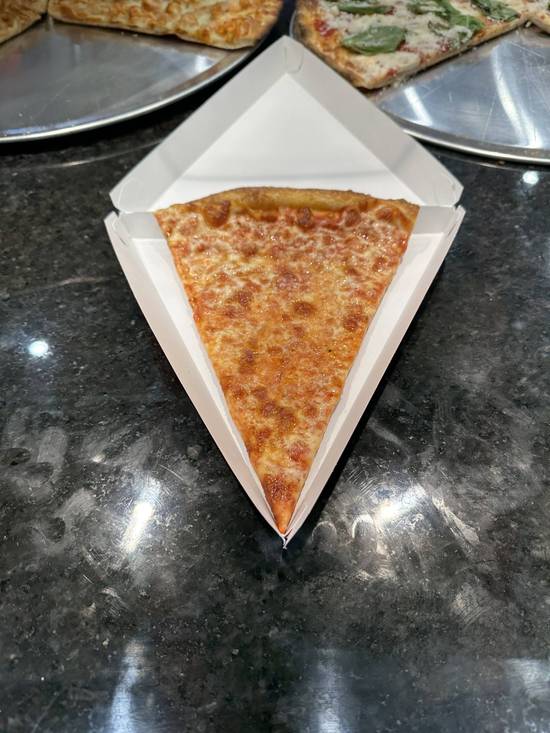
A cheese slice, straight out of the oven.
Last updated by the kitchen team
Table of contents