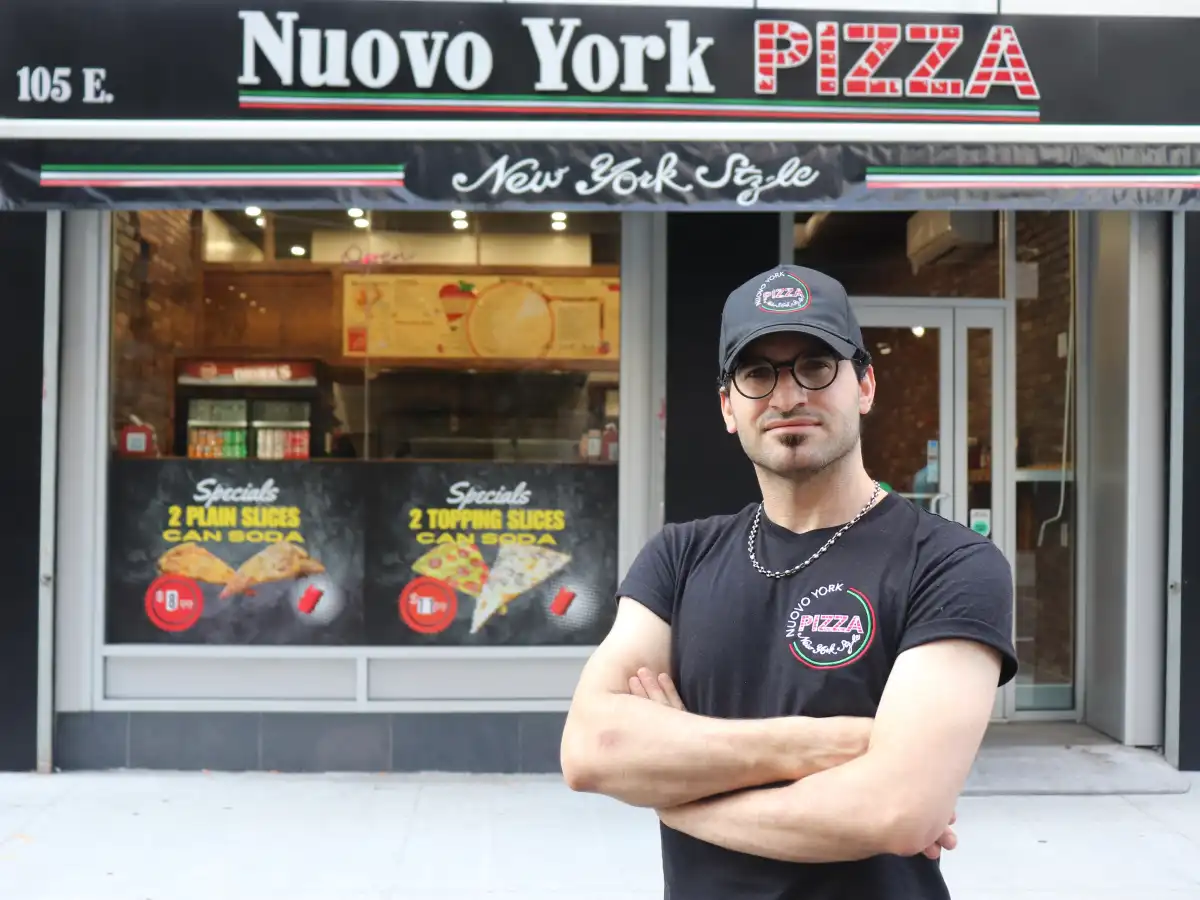
"The sauce, the dough — it's the same discipline. Different application."
He came to New York for a master's degree. He found pizza instead.
Atalay holds an undergraduate degree in engineering. He arrived in New York to continue his studies. The kitchen at 105 E 9th Street is what happened next.
The move from engineering student to pizza maker was not a departure from the discipline, it was an application of it. Every variable that defines a great pizza has a measurable answer. The pH of the sauce. The viscosity. The rate of fermentation. The temperature at which ingredients emulsify. These are not mysteries.They are problems with solutions.
No other pizza shop in the East Village was built this way.
Four variables.All controlled. All measurable.
The kitchen at Nuovo York is a functioning pizza shop that runs with more scientificrigor than most. Here is what that looks like in practice.
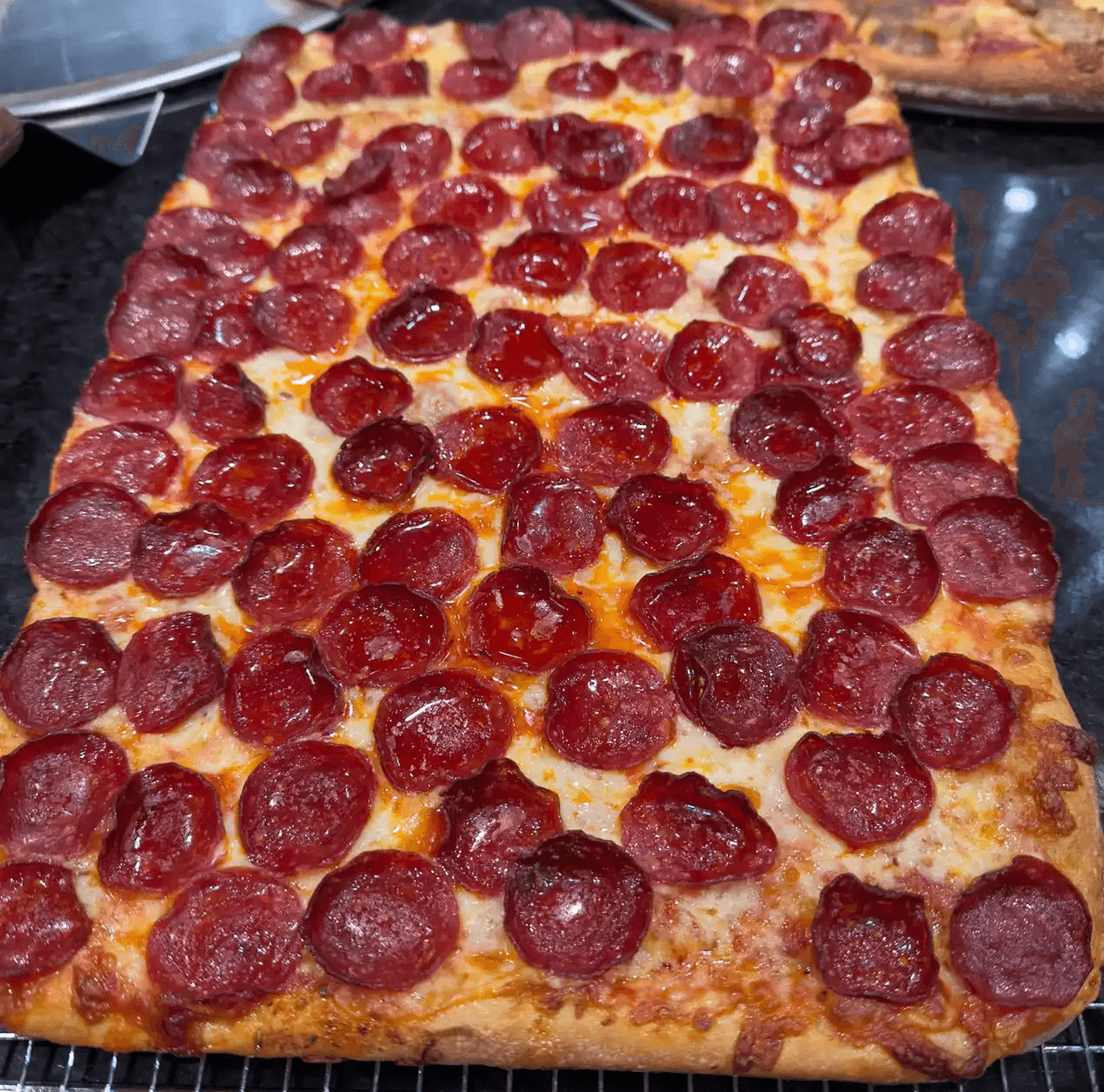
Sicilian Square By Design · Less Caloric
The Sicilian square.
Engineered lighter.
A Sicilian slice is supposed to be thick and heavy. Ours is not. More air engineered into the crust means more volume, les mass per bite. It appears substantial. It doesn't sit heavy after. That result is not an accident — it is what applying an engineering discipline to a pizza recipe actually produces.
The Sicilian square is the clearest example on the menu of what Atalay's approach does to a pizza. You can taste the difference. Now you know why.

That is not a marketing line. It is the reason the pH is measured, the fermentation is timed, and the viscosity is controlled. Every instrument in that kitchen exists to produce one outcome: a pizza that is lighter, cleaner, and more consistent than the storefront on East 9th Street would suggest.
The engineering is not the story. The pizza is. The engineering is just the explanation for why it tastes the way it does.